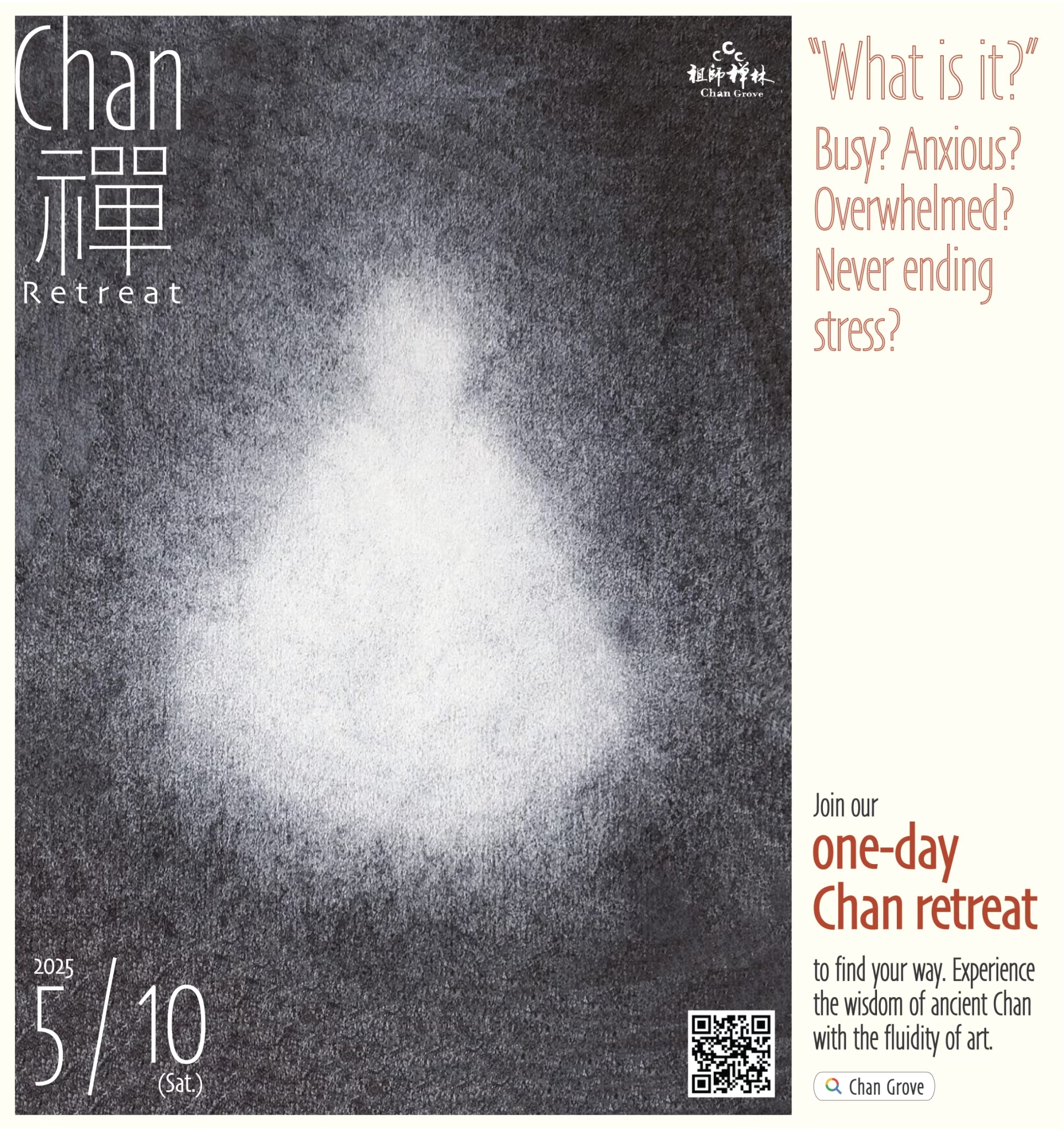
5 祖师禅林20250510禅一问答
播放问答录音 (音频时长:1小时6分钟)
以下内容为AI转写,暂未经人工审核。请配合音频阅读。
【说话人1】
Hi, everybody.
Very welcome you attend the Chan Group.
I believe you have a good experience today.
And this maybe the only one retreat you have get involved, including so many different kinds of.
Type, huh?
And I think you must be have good feedback to me.
So, actually,The section we invite you to sharing your experience or Asking some questions, I can reply you immediately.
Please, this your time now.
Maybe cue and question and answer first.
Who have answer, have question now?
Regarding today, you have learning some. meditation method, or some concept, maybe you are not so.
Clear understanding.
How to use?
Maybe you can mention now.
Microphone, please.
Micro-.
【说话人3】
Hello, so indeed, the question is a bit how to bring its, bring what we did, in our everyday life, bring it, oh, I, I,
【说话人2】
Yeah, the question is how can I incorporate it in my everyday life or.
他问生活中怎么运用?
哎,就今天所体验的、 所经验的,
可以怎么带入生活?
【说话人1】
Please allow me speak Mandarin.
I would like to more clear to you, for answering your question.
关于生活上的运用。
As regards to using it in daily life
事实上, 今天你们参加这个。
禅修哈,我们安排了非常丰富的元素在里面。
【说话人2】
In the Chan retreat today there are many different elements
那我们
sort of
设计到这个
program
里面。
【说话人1】
那这些元素事实上都是我们生活当中呢,
经常会碰到或用到的。
生活元素。
【说话人2】
And these elements are lots of things that we often encounter in our daily lives
我们今天让大家练习。
【说话人1】
如何放松身心?
For example practicing how to relax the mind and body
在现代的生活对我们来说呢?
都有很大的生活压力, 有很多很多周遭的一些刺激,
让我们心呢都很不安稳。
【说话人2】
In modern life there are a lot of stressors and lots of stimulus that often cause us to feel not relaxed
【说话人1】
安定身心,放松身心是我们现代人非常重要,
要能学会的,在任何的处境之下,
环境之下。
甚至刺激之下都能保持放松, 都能保持安定。
【说话人2】
So the ability to remain calm and relaxed and to help ourselves relax even in the face of stimulus or challenging Situations, is an ability that everybody really needs in this time.
【说话人1】
另外就是在我们的现实生活当中, 不管是工作,
还是说在家庭里, 我们都必须要专注的。
把当下的工作做好。
【说话人2】
The other thing is in our lives whether it’s work or personal life we all need the ability to focus on the task at hand accomplish or finish whatever is in front of us
所以学会如何能专注在当下。
【说话人1】
安住在当下,也是非常重要的。
【说话人2】
Acquiring the ability to stay in the present moment to focus on the present moment is also very important
当我们能专注在这个当下的时候。
【说话人1】
仍然可以保持轻松的心情, 放松身心。
这个是需要学习跟锻炼的。
【说话人2】
So even as we stay concentrated and focused on the present moment we can also stay relaxed And at ease But these two things require practice to stay in balance
像刚才最后一个
section
我们请大家呢在画画, 然后我们播放的很轻柔的音乐,
很舒服的音乐。
可是
【说话人1】
呢,你必须完成这一幅画。
我们在听着音乐放松身心的情况之下呢,
专注的完成你的画作。
【说话人2】
So like in the last exercise, we’re playing some very relaxing music.
But at the same time, there was a task at hand to finish the painting in front of us, which required an ability to concentrate, and but at the same time, stay relax while listening to this music.
【说话人1】
我就没有办法放松,我就精神, 神经,
肌肉,全身紧绷的, 才能做好专注。
事实上不是的,在放松的同时。
是可以专注的做好当下的工作。
在专注的那个当下,是可以保持放松的身心的。
【说话人2】
So relaxation and concentration can occur simultaneously.
But in our daily lives, often this somewhat foreign, you know, when we Concentrating, it feels like we need to clench up, we need to tense up, we need to really hunker down.
But actually in the moment of focus and concentration.
We can stay relaxed in mind and body.
【说话人1】
我们今天从早上到下午, 我们都在围绕着这个主题,
就是放松身心,专注当下。
让大家不断的在练习。
这两项对我们现实的真实的生活就非常非常的有帮助。
【说话人2】
So from this morning to this afternoon we’ve been practicing staying connected and present with this moment, while also staying relaxed and at ease. soThis practice is very much useful in our daily lives.
Did I answer your question?
OK.
【说话人1】
Next.
【说话人3】
Hi, it’s me.
I just wanted to say, first of all, thank you for them, well, for the whole day, but especially for them.
Lunch meditation we had.
I found that really, I was very impressed.
I mean I love eating, that’s the reason I travel Asia.
But at the same time, I’ve always had a very difficult relationship with food.
I’m sure many women can relate.
Young women, so I found that really useful for yeah, how to eat mindfully, and I’m hoping I get to apply that.
Every day but that first bite of a pineapple I’ve had it was like I it almost brought me to tears I was like the sensations this yeah it was crazy So yeah thanks for that and
这是。
这是,这是,这是,这是, 这是,
这是,这是,这是, 这是,这是,
这是,这是, 这是,这是,这是,
这是, 这是,这是,这是,这是,
这是,这是,这是,这是, 这是,
这是,这是,这是, 这是,这是,
这是,这是, 这是,哦。
【说话人2】
啊,吃饭的才。
对,那就说就是觉得说他吃是。
啊?
哦,没事,
ok
,好。
就是对,他就是觉得吃饭的餐对他体验特别深刻,
然后尤其是那口那个 那个叫什么?
凤梨凤梨,谢谢哈哈, 特别甜哈,
就是几乎都快哭了。
啊,那身为一个女性, 她年轻的女性,
她其实对吃的关系也蛮复杂的。
所以他特别感谢有这个练习, 今天这个练习。
【说话人1】
吃饭是我们每一个人每一天都必须一直重复在做的,
我们一辈子呢,每一个人呢都离不开吃饭啊。
【说话人2】
Yeah all of us need to eat each of us in our livesYou know cannot stop eating Yeah
今天我们教大家如何用禅的方法吃饭。
Today we shared with everyone how to eat Using Chan.
【说话人1】
很重要一点,我们平常吃饭都动作太快了,
今天我们要让你慢下来。
【说话人2】
One very important point is usually when we eat we’re all Too quick always in a rush So today one of the key points of today was to slow down
【说话人1】
当我们慢下来之后,我们才会觉察到这个过程当中有好多好多值得去享受的部分。
可是过去我们都太快了, 都忽略了,
都失去了生活的乐趣, 生命的那个真实的意义,
过程当中都流失掉了。
【说话人2】
Yeah, one of the benefits of slowing down is we notice all of the little details that are worth enjoying in this process, and so often when we’re in a rush, a lot of the meaning.
【说话人1】
a lot of the things that are worth being grateful for get missed
当我们放慢了之后, 开始觉察到周遭这一切的细节的时候。
我们就真正地感受到这一切的意义跟这一切的美好。
人生不管你在什么阶段。
你认为好的不好的,舒服或不舒服,
其实都有它的意义所在, 就看我们有没办法去看到它。
【说话人2】
So, when we slow down, we are able and start paying attention to everything around us.
Then we can notice all the things that have meaning and that are worthLiving for, and so, that’s very important thing to learn.
【说话人1】
当我们能看到的时候, 我们在更深层地用上禅法,
禅修的很重要的理念, 就是不去分别它。
那将会让我们一直处在很自在的一个情境当中,
摆脱了所谓的烦恼。
【说话人2】
Ok, so, and when we’re able to live in this way, we can then also use the method of Chan, which is non differentiation. which will allow us then to stay in a at ease state, and Leave a lot of Anxiety and
烦恼
is like suffering Yeah
【说话人1】
Please.
【说话人2】
Can you explain when you use the technique for non-differentiation as opposed to when you use the technique in order to notice things so that you may get more enjoyment and pleasure and gratitude from them
可不可以解释一下何时用不分辨?
然后得到自在,然后何时用分辨,
就是要觉察周遭,而能够觉察到这个自在跟知道我们周遭在发生的事情,
何时用哪一种方法。
【说话人1】
哎,是的,你提到这个是我们禅修非常重要的核心。
啊,这个不分别啊,不分辨嘛啊,
不分别。
【说话人2】
嗯,哈,哈,你你
bring up something very core to Chan which is the non differentiation
。
【说话人1】
我们人之所以会有烦恼, 起自于我们有这个分别之心。
【说话人2】
A big source of our suffering as humans is this
【说话人1】
Distinct constant distinguishing and differentiating
这个分别之心呢是源自于这个我。
【说话人2】
The source of that differentiation is me, the idea of.
I.
【说话人1】
这个我啊,也可以说是所有一切烦恼的根源。
And me is I am the source Of all suffering
所以禅修最终最终的就是要 对峙到、 消融到这个我,
才能得自在, 或者是所谓的解脱。
So the ultimate purpose of Chan practice
【说话人2】
Is to reduce and even eliminate the sense of I, me, in order to and attain true liberation.
【说话人1】
只要我存在一天,我们就烦恼一天。
这个我存在一辈子,这个烦恼就跟着我们一辈子。
【说话人2】
As long as I exist for a day my suffering also exist for another day And as long as I exist for this life my suffering also exist for this life
那那你可能会更觉得纳闷, 那坐在这里的这个不是我是什么呢?
【说话人1】
这个当然是跟着我一辈子啊, 那跟着我一辈子,
那我就不可能解脱了, 我就一辈子有烦恼了。
坐在这里的不是我,那是什么呢?
【说话人2】
So natural question arises from that of then who is the one sitting here isn’t that me You know if it’s not me who is it
【说话人1】
是的,这个就是我。
可是佛教告诉我们,这个我不是永恒的存在的,
它是分分秒秒一直在变化的, 是无常的。
啊,我们称为空相。
【说话人2】
So, yes, it’s me sitting here, but it’s not a permanent me.
It’s a me that’s constantly changing every second, every moment.
And that’s the teaching of the Buddha.
【说话人1】
当我们学习佛法或练习禅修的时候,
我们就会体证到,原来这个我确实它是在一直在变化当中的。
【说话人2】
It’s not eternal and unchangeable it’s not like that So when we practice and enter the Dharma we can truly experience for ourselves that this me truly is changing constantly Moment to moment and not a fixed entity
【说话人1】
这种一直在变化的这个我, 我们称为无常,
又又叫做空。
【说话人2】
So this fi-, this constantly changing me is we say is impermanent and is empty.
【说话人1】
经过学习佛法,修行禅法, 会让我们体证到这个空,
这个无常, 确实是如此的。
【说话人2】
So through practice the Dharma and.
We can truly experience that for ourselves, that this true.
【说话人1】
当我们体证到啊 这个我是确实是一个如此啊,
是一个无常,是一个空相, 这个就叫做无我。
【说话人2】
When we truly experience that this me is impermanent, is empty, called non-self.
【说话人1】
当我们体证了之后,我们对于这个我就不再执着。
【说话人2】
So, when we truly experience that, we’re able to let go of attachment to self.
【说话人1】
不再执着就不会有分别, 就是所谓的解脱,
就不会有烦恼。
So non attachment is what leads to
【说话人2】
The ability to not distinguish, which allows for freedom.
【说话人1】
From suffering
当然对于各位可能刚开始学习禅法,
我刚才讲的这一些可以说是比较深的一个佛教的一个义理。
啊,我们现在可能听不懂, 可是呢,
我们如果持续地用上方法去练习去做,
我们会逐渐逐渐地了解。
这个事实啊,原来这个我是一个无我的状态啊,
我们就不会去执着它了, 我们就可以得自在了。
【说话人2】
So, for those of us who maybe are a fairly new to practice, you know hearing these concepts may seem kind of deep, and maybe hard to understand in the immediate.
But as we continue to practice and to experience in our practice, we can get closer to that step by step.
【说话人1】
Did you have a second question?
【说话人2】
啊。
对他他刚刚是在问说, 这个不分辨,
何时不分辨, 那何时是要分辨啊?
因为前面也讲说,诶, 觉察能让我们发现到。
很多周遭的生活的美妙啊。
【说话人1】
just repeating your question again
这个
awareness
啊, 觉照觉 茶哈,是修行的一个关键所在。
不管任何的法门,几乎都在锻炼这种能力,
觉察的、觉照的能力。
【说话人2】
So awareness is truly fundamental to Chan practice, and almost all of the practices are sort of training and developing this ability in some way.
【说话人1】
当我们培养出这样子的一种觉照的能力之后,
我们就能洞察在我们眼前的这一切的现象。
不管是有形的啊,花草树木, 还是无形的啊,
我们的这种因, 精神意识情绪,
我们就能觉察到这种有形跟无形的现象。
而不受到影响,不受到这些现象的影响。
【说话人2】
So as we develop this ability more and more we’re able to become aware and notice all of the different phenomena happening outside and inside, but in the noticing not be affected.
【说话人1】
这种能力培养,觉照的能力培养出来之后,
不受到影响的能力,不分别的这种状态,
不执着的这种状态。
就叫做智慧。
【说话人2】
So, this non-distinguishing is really pointing to noticing but not being affected.
And this wisdom.
【说话人1】
当这种智慧升起了之后, 我们就会知道有些事情该怎么做,
有些事情 不要去做啊, 会有一种很清晰的一种辨别能力。
啊,那这个就是你刚才所问的啊,
这个什么时候该觉觉察, 什么时候不要觉察,
那个不需要我们事先做一个标准。
作为判断,而是说当我们有了禅法了之后,
它自然会产生这样的一种能力。
这种能力就像我们肚子饿了。
哎,肚子会饿,你就会去吃饭。
然后我们累了,我们就想睡觉, 就是一种很自然的一种反应。
【说话人2】
Said as we continue to practice wisdom arises, and the function of wisdom is to know in the moment, moment to moment,Whether this something that we should do, or whether this something we should let go.
And so this going back to your question about when to differentiate or when not to.
There isn’t a fix standard for that, but rather something coming quite naturally as we practice of from observation and knowing.
So just like he used the example of just like when we’re hungry, no, we know that we’re hungry, so time to eat.
【说话人1】
Yeah
我我这样子的解释, 我相信你是似懂非懂的哈,
因为你还没有很深的禅修的体验的。
【说话人2】
Okay so he said he use this analogy to try to help us to understand knowing that you know we may not yet have the depth of practice to truly Have experienced that for ourselves but
如果你想真实的有所体验。
【说话人1】
然后懂得我刚才在讲什么呢?
我会 建议你,邀请你今年 10 月份的时候,
10 月 19 号,我们有一位来自美国的一位禅老师。
啊,他是圣严师傅的一个传法的弟子。
他会来这里呢,开办 7 天的精进的禅期。
那我认为那是你一个很好的一个学习跟体证的一个机会。
今年的 10 月 19 号, 欢迎你再来。
【说话人2】
So he said if you would like to experience more of this for yourself this, later this year, October 19th, there will be a seven day Chan much more in depth meditation led by one of master Shenyan’sStudents who lives in the US. but he’ll be coming here just for the retreat, and it’ll be here at Chan Grove.
So he’d like to suggest and also invite you to come to experience this for yourself.
【说话人1】
Of course, not only you, including all of you, I will invite you.
The general you, of course.
To ha ha.
To come again October. 19 will be a intensive retreat here.
I believe you will be more understand what I’m talking about.
Before, hahaha.
Okay, and then.
来, 麦克风,来。
【说话人3】
Yeah, I just have the a little question about the meditation process itself.
So, pre-, I was aware that today during each of the meditation sessions, we were told to close our eyes completely.
Yeah, so the reason I asked this question was previously, I took some meditation classes at the Dama Zhuang mountain as well.
And basically, the masters all recommended us to Keep our eyes a little bit open for the reason that we could avoid, you know, kind of dozing off or losing concentration like that.
Yeah, so that was a bit different to what we were taught today.
So, yeah, I just wanted to ask, are there any differences in the purposes or the meanings of both approaches during meditation?
Thank you.
【说话人2】
Jason
我我翻译一下哈。
对。
他他就是问说他之前在法鼓山学习,
就是有一个关于打坐过程的问题。
那就是在法鼓山有学到说。
他们法师会建议这个眼睛是微张。
啊,那刚刚老师们都是建议我们闭上眼睛。
那他知道法鼓山那边这样。
就是胶是为了比较不容易昏沉, 睡着。
就是好奇说这两个差异在哪里, 然后有没有什么不同的意义所在。
【说话人1】
其实闭眼睛跟睁开眼睛呢, 都可以哈。
那差异在于就是闭眼睛容易昏沉,
失去了觉照力。
啊,那睁开眼睛呢?
比较累,你比较难以持续的久。
啊,那你可能就会对于这个方法呢,
就会 比较不得力啊,比较不容易相应。
其实差别就是这样子而已。
这样。
【说话人2】
He said actually you can do both during your practice.
When the eyes are closed, it is true, it’s easier to doze off sometimes.
When the eyes are open though, sometimes it’s more fatiguing.
And so can be harder to stay connected to the method for a long period of time.
【说话人1】
不过我确实会建议,尤其我们刚开始学习打坐、 禅修,
最好练习就是睁开眼睛打坐。
睁开的时候大概开个两层、 三层为开的。
一开始就学会学习习惯这样子打坐,
长期来讲呢是比较有利的。
所谓的有力,就是说既不昏沉, 也不会散乱,
然后呢又能持续。
让方法呢就可以得力啊, 可以用上,
受用就比较大。
【说话人2】
He he would like to suggest that when starting practice to stick with the eyes slightly open method, because that can help us to stay awake, but at the same timeStay relaxed and stay connected to the method.
【说话人1】
Anyone?
来。
【说话人3】
Can you suggest whether it’s books or sutras or things that we can read at home to teach ourselves more about Chan practice?
【说话人2】
Well would you suggest we read or other sutras that you think we should focus on more than others
如果在家里想更深入禅法。
有没有建议的经文?
或是咒语?
或是任何在家里可以读的?
【说话人1】
就我们禅宗的修行方式来说的话哈,
我们是叫做 无相法门, 心地法门。
【说话人2】
To, in the Chan practice, Chan refers to what’s called
无相要怎么翻啊?
【说话人1】
formless
。
【说话人2】
formless
啊,
the formless method
。
Yeah yeah
。
【说话人1】
还有心地法门。
【说话人2】
心地法门我不知道怎么翻, 对不起。
My my made
心地吗?
Yeah the formless method and the mind Mind base method. mind method OK sorry these are some specific
禅中的修行呢是不拘形式的。
【说话人1】
啊,像譬如说刚才讲提到的。
诵经呐,持咒啊。
啊,甚至礼拜呀,啊, 这些都是一种形式。
禅宗是不讲究这些形式的, 而是心如何去用上方法。
如何去相应这一切的这个真实现象,
这样的,用心直接去去应对的。
【说话人2】
Yeah.
So in Chan, there is an emphasis on not being attached to any particular form of practice.
So both mantra and sutras, and even let’s sayProstrations to the Buddha are a particular form of practice.
So in Chan, the emphasis on directly experiencing all phenomena.
And attaining the practice that way.
【说话人1】
不过,并不是否定那一些形式啊, 而是说我们不要去执着那个形式。
那对于我们初学者来讲呢, 这些形式呢反而是有助于我们安定身心。
啊,也就是所谓的禅定, 培养禅定的功夫,
这样。
【说话人2】
So, but this not to say that those forms are not helpful.
It’s just simply to emphasizewanting to stay away from attaching to these forms, thinking the form is the practice.
But at the same time, these forms can be very helpful.
At the start, as to develop a stability and concentration.
【说话人1】
再来用上这个禅法的时候, 是会让我们更能培养。
那个强大的觉照能力, 那个觉照的能力有这个禅定的功夫,
它是一个很好的基础啊, 是一个很重要让我们练习培养觉照的一个一个基础啊。
所以我们做那些功夫我们做那些用功这诵经啊。
持咒啊,或者是其他的形式, 培养我们的禅定。
那那些禅定是有助于我们培养那个觉照的能力。
【说话人2】
So he does, yeah, encourages either mantras or sutras or these forms are very helpful in developing stability.
And when we have stability, then the awareness And and being o-, the ability to stay very aware, is easily built on top of that.
【说话人1】
OK, fine.
No, anyone, please.
【说话人2】
他刚有在问有没有,他可能也是想问说有没有具体哪一部经,
或是哪一个咒语是你会练习去, 可以就是先上手练习的。
嗯。
OK additional
【说话人1】
对于我们初学者来讲啊, 就我刚讲的那个禅定的功夫很重要嘛,
啊,那我打坐啊是很容易进入禅定的状况,
打坐是一个。
【说话人2】
Ok so he said for beginner practice he says meditation is one of the most fundamental important thingsBecause the practice of meditation can really help to develop our stability
那诵经的话哈。
【说话人1】
我会建议诵心经,很简单很短的, 那如果时间比较多的话,
我们诵金刚经。
【说话人2】
Yeah OK so as for sutra specific sutras he would recommend either hard sutra because very short or if you have a little more time the diamond sutra
【说话人1】
那如果持咒的话啊,我会建议你持我们禅宗唯一的一个咒语,
叫做摩诃波罗波罗蜜。
【说话人2】
As for mantras, he would recommend sort of the one and only mantra of the Chan method, which is
【说话人1】
马哈帕加那帕拉米达。
这个咒语的意思是说一个无边广大的智慧,
啊,这个指的是佛的智慧。
能带领我们到解脱的彼岸, 离开这个烦恼的这一岸。
啊,它这个咒的寓意是这样的。
【说话人2】
So, Maha Prajna Paramita is the mantra he would recommend for Chan practice.
And the general meaning is the wisdom and insight that can bring us to the other shore.
【说话人1】
这个咒语是我们禅宗的六祖慧能大师啊,
在他所留下来的六祖坛经里面。
所提倡的啊,持咒啊, 持这个咒叫,
马哈普拉吉纳帕拉米达。
【说话人2】
So this mantra is the one shared in theLiu Zu Tan Jing text, the 6, you’re nodding your head, okay?
Sorry.
Platforms. the platform sutra. 6 Thank You Bryce, yeah.
【说话人1】
Play from sutra.
【说话人2】
Yes, and so that’s the mantra referred to in that ma-, in that sutra.
OK.
OK.
Next.
【说话人3】
So first, I just wanted to say thank you very much to all the teachers today.
There was, it was really kind of yeah, very mind boggling, although I’ve done meditation for a while.
So I learned a lot from everything.
So my question is I don’t even know who’s OK, so my question is When we had to do the arts.
For me, my thoughts were immediately, I can’t do this, this horrible, I am terrible at art, this always my approach, it’s always been like that, ever I think since I’ve been ten.
I used to love art, I guess, as a kid, but it’s gone right?
So my question is, and of course it was it was very powerful, because after I finished.
Painting and looking at this, immediately the question was, who made this?
Not that I thought it was good, but just who made this?
But my question is, why is there so much pain and difficulty?
【说话人2】
他首先想感谢所有的老师, 好,今天觉得很有收获。
那他想就是分享在这个艺术带领画画的这两个阶段呢。
他自自己其实从 10 岁开始就一直觉得自己不行,
这方面是不行的, 所以坐坐下来的当下有很多念头,
就啊, 这个不行啦,我不会画画,
这不好看啊。
啊,但是画完其实是很有力量的哦,
就反而有一种念头说, 啊, 这谁画的?
啊不是说多棒,但是就是有一种哇,
这是从何而来?
啊,那他的疑问就是想提问说这个,
为什么?
Is it related to art in particular this pain or when I’m asked to do something like this like today it’s Yeah
啊, 所以为什么就是好像要这样子创作,
或是可能发挥一些艺术方面的。
会有这么多的痛?
或是好像觉得很紧。
【说话人1】
佛陀,释迦牟尼佛在菩提树下证悟成佛的时候呢,
他第一句话所告诉我们的就是, 我们每一个人啊。
都跟他一模一样,有那个佛性。
【说话人2】
The Buddha, when he became enlightened under the bodhi tree, the first thing he said was that we all have the same nature as him, the Buddha nature.
【说话人1】
这个佛性呢是包括了一切, 有大智慧,
有大慈悲。
This buddha nature includes everything
【说话人2】
The biggest compassion and the biggest wisdom.
它就涵盖了有无限的创造力在里面。
Including an infinite creativity that’s it within that
【说话人1】
当我们在用上禅的方法在创作艺术作品的时候,
你就会发现他好像可以超越本来我以为的我。
【说话人2】
When we use the Chan method and tap into this creativity.
Often, you surprise yourself that you’re able to transcend limitations that you thought I have.
【说话人1】
当你看到你自己的作品, 你可能都会非常的讶异。
这是我做的吗?
我可能会达到这个样子吗?
哎,没错。
因为我们不认识自己, 我们不晓得我们有一个无限可能的一种能力没被开发出来。
那在这个当下,我们在禅的这种情境之下,
我们流露出超越我们普通的那个我,
而流露出我们与佛无二无别的那种。
佛性的功能。
【说话人2】
So when we look at this you know this piece of art that we’ve created it may feel like you know yeah where did this come from But in the context.
【说话人1】
And in the practice of Chan, as we’re kind of just flowing, it is possible to transcend a lot of the limitations that we thought we had.
And access something that’s much greater and full of infinite possibility.
【说话人3】
所以,为什么我们要学习佛法?
为什么我们要修行?
因为我们对于这个我 知道的太少,
我们对于这个我的潜能或他所具足的那些本能完全不知。
透过学习佛法,修行会开发出远远超过这个我啊,
而是广大无边,与佛无二无别的那种本能。
【说话人1】
So the reason it’s so important to practice is in the course of practice we can transcend the ideas of me.
And access what is the Buddha calls the similar Buddha nature as him, and the Infinite sense of me.
【说话人3】
OK.
Oh, welcome your sharing about your experience today.
Anyone?
These two gentlemen please sharing something.
【说话人2】
First of all, I think it’s was very useful, you know, to have those somatic exercises which involved the movement.
The breathing methods, that extremely helpful, you know, to get focus and also.
To be in contact with your everything what is going on inside of your ears And it was very helpful
首先觉得今天就是各种跟感官连接的练习。
【说话人1】
啊,非常有帮助啊,让他能够跟自自己内在比较能够连起来哈,
不管是呼吸的练习啊, 动态的练习。
【说话人3】
And I think it’s quite useful to use in whatever practice of meditation, you know some elements of qi gong or tai chi.
【说话人1】
他觉得就是加入一些类似像气功、 太极这种的元素进来,
在练练习里面是很有帮助的。
很有用的。
【说话人3】
Yeah so that’s hmm main point of my experience today
这是他今天一个主要的收获。
【说话人1】
啊,感觉。
好,谢谢,谢谢。
【说话人3】
Oh.
Read.
【说话人2】
Yeah, I would also like to thank all the teachers and all the organization that went into this event.
I especially like to kind of the experimental Side of things with listening to the music or the painting, cause I hadn’t it was just something new for me, so
【说话人1】
他也一样想先感谢所有的老师, 还有就是背后的这些策划。
然后尤其想觉得这个就是有掺杂一些艺术成分的。
练习对他很特别,他没有经验过。
So that’s it.
Hey.
【说话人3】
I will invite two or three ladies.
Scary.
Please, you.
Ha ha.
Thanks for all the teachers today.
It’s first time to do the meditation through a art method, so it’s very special.
I think also, instead of normally you just goes go to a temple and do the meditation, instead of that, I also learn how to aware more the method into the daily basis, like through the eating.
And through the walking.
So, yeah, so I think that’s what I earn and learn the most today, that’s different.
Instead of just hear how knowing, if you should Through the meditation, method, get into the daily life, but I truly Experience and try, through the actual method and experience for like eating, even through the art.
Yes, so thank you.
【说话人1】
他也是谢谢老师们,然后也觉得艺术的这个成分很特别。
那他自己收获最大,觉得是可以真正体验到。
啊,这个禅法跟生活的结合, 透过各种练习,
哈,吃饭走路, 而所以不是来到寺庙听说应该要带回生活,
而是真正有自己能够机会体验到哦,
就生活上的运用。
【说话人2】
Just to echo, thank you again to everybody who was part of this.
I could see how much effort was put into organizing a full day event.
To all the teachers who are willing to share their expertise and practice, I have a lot of thanks to you.
In terms of how I felt about this overall And then I was just really, personally, Jason Jason, I really love what you’re sharing, and I and I feel like I haven’t been able to find that in different places, and the people that I’ve been able to talk to.
So, I really appreciate what you’re sharing, and I would also love to learn more in the future, in turn.
【说话人1】
他也是首先感谢啊所有的老师跟大家一起,
他可以感觉到就是多用心的筹备了一段时间哈,
才能做出这一整天的活动。
那他也想特别感谢,
Jason
, 你就是今天正在分享的内容。
那他觉得很有收获,他在其他地方并没有听到过,
然后很有兴趣了解更多。
【说话人2】
I think in general, I’m also just really impressed with how this entire event was organized, like logistically, and also in terms of format and style, and why you chose to do things in certain ways for the audience that you had.
So I have a lot of like I’m just curious about if the art form was in particular to this audience or if you’ve done it before or if it’s been done in like in Mandarin before
所以这些是就
kind of
东西。
那
came up for me
但
in general
我
really appreciated the practice
他很欣赏我们的形式, 觉得很特别。
【说话人1】
然后尤其就是带入艺术这些元素啊,
那就好奇说,哎,有用中文带过吗?
还是在其他的场合有这样?
做过吗?
还是这是特地为我们这一群人客制化的一个课程。
对,他就是有一些这样的好奇。
【说话人3】
特别为你们设计的今天的所有这一切。
Customized for you all
你们是我们的白老鼠, 这是我们第一次的英文的禅修活动。
【说话人2】
You’re also our guinea pigs in this case This was our first English Chan retreat actually Yeah Then I think you and you did an amazing job facilitating I think it was really beautiful how you were able to melt the concepts together and also convey
。
it to this audience
【说话人1】
就特别感谢我们觉得就是处理得很好,
能够传达得很好。
【说话人3】
非常谢谢啊,大家今天的参与哈, 让我们完成了啊,
我们的第一次英文的禅修。
我们组织禅林呢,计划呢, 要把这个地方呢,
打造在北台湾啊, 甚至台湾的一个英文禅修中心。
【说话人1】
So thank you to everyone for participated today, and helped make this possible.
All of your participation, and we have a vision, and a hope.
To create a English Chan Center here, in northern Taiwan and in the whole of Taiwan.
期来讲, 可能要好多年之后, 我们希望成为台湾的一个国际禅修中心。
【说话人2】
In this probably years from now over the long term but we would love to become an international Chan center here
你们的参与啊。
【说话人1】
是我们很重要的一个经验的累积的开始。
Your participation was such an important first experience for all of usIn starting this process So you guys are also the contributors to the future of the International Center
【说话人2】
So thank you to everyone for your contribution to this future realization of the International Chan Center.
【说话人1】
当然我们今天的这些安排哈, 都是第一次的尝试啊,
我们会不断的去完善, 不断的去应应现代人。
心理的需求、现实的需求, 把禅法的精神融入进去。
我想这个还有很长的路, 我们要不断地去努力。
【说话人2】
So thanks again to everyone, and it’s our intention to continually modify and adjust the program going forward to match andmeet the needs of the people in modern society, modern life, in this age.
Yeah.
Can I also add a very special thank you to you for translating this entire thing, just because.
In I’m Taiwanese American but my mandarin male you li so you just
听不懂
a lot of things So I can go to Chinese meditation class but I can’t really understand what master sheefoo was saying To the to the deepest level, and that’s the knowledge that I am seeking for.
So, I’m really thankful that there’s somebody like you who is able to bring that knowledge to this audience.
I thank you my translation.
Oh, yeah, yeah, yeah.
I’m I’m grateful for this opportunity.
And thank you for bearing with me.
I know maybe some specific Words, I didn’t get quite right, but yeah.
【说话人1】
各位今天参与了一整天的我们禅修的一个体验啊。
这正是我们禅宗的核心法门, 祖师禅的精神所在。
【说话人2】
Thanks again to everyone for participating, and you know the sort of crux of what we were doing today is to transmit the kind of essence of Chan.
【说话人1】
祖师禅是很活泼的,是很生活化的。
【说话人2】
Chan gung is very connected to daily life and very spontaneous
【说话人1】
是很适合我们现代人来学习的。
我们希望在这里能把我们禅宗最核心的法门,
祖师禅,在这里呢,弘扬光大, 让更多的现代人啊。
可以受用,可以受益。
【说话人2】
Yeah
祖师禅英文应该怎么?
Patriarchal Chan So so what the specific method being transmitted here is Patriarchal Chan and Jason is sharing that this type of Chan is very suitable for the modern person, and so, you know, that’s our intention to Through these classes and these retreats share that with everyone.
【说话人1】
各位今天如果有很不错的这个体验的话呢,
我们非常欢迎啊,你们再介绍你们周边的好朋友。
啊,尤其是比较习惯英语的这样子的一种语言的学习的话呢,
不管是外国人啊,海外的或者是我们本地的哈,
我们都欢迎你们呢去推荐他们。
【说话人2】
So if you had a good experience today, we’d love to invite you to spread the word, and invite other friends or people that you know who might benefit from this kind of thing. either overseas or locally.
And and come practice with us.
【说话人1】
Pre, microphone, please.
【说话人3】
I did have a comment.
So, I was also interested in two weeks ago, there was a session photography.
But both the photography session and today, I knew there was something to do with art.
But both sessions, there was not a lot of detail, and I don’t know if that’s on purpose, and I was willing to accept that maybe you don’t want to tell us too much, and Just show up, and you’ll be surprised.
So I don’t know if you purposely don’t want to share the details of what will go on or you will share like
你知道, 这这会是那种, 围绕艺术或摄影的体验。
yeah
。
【说话人2】
他只是想跟我们反映说, 这个前两周也有个摄影的活动,
啊跟这次结合艺术一样。
啊,但是他就说海报上就是一些细节,
具体的细节不多。
哦,那不知道是不是我们刻意这样子,
还是可能以后可以可能在那个不管是海报或
DM
里面宣传稍微多一点, 就是实际可能那个过程的内容会是什么样?
【说话人1】
你你是说多一点什么?
【说话人2】
他是提提问,对好奇, 就是我们比如说在海报啊,
可能在在不同,对宣传上面可能没有讲太具体。
哦,今天会干嘛?
只是知道跟艺术有一个结合。
哦,那是好奇是刻意这样子呢?
还是之后可能有可能分享多一点细节?
【说话人1】
这个是很好的一个建议哈, 谢谢你提醒我们。
或许在日后我们的这个宣传上面哈,
如果 能把我们今天丰富的这些元素放上去的话,
可能更吸引一些人来参加。
【说话人2】
让更多人呢对这个禅法呢
More more have a chance to know him Yeah thank you very much for your suggestion and comment Yeah perhaps going forward we should Have a little more detail in the in the posters and in the marketing or you
。
know information just what’s gonna happen
【说话人3】
Sessions, I think the most difficult part was the meditation, for me, and I know that’s going to take time to, for me to feel like I’m Getting better, but maybe even during today. take a moment to address how people are feeling about the meditation, and where they felt they were struggling, you know, just process that a bit, process.
【说话人2】
Maybe some of the problematic feelings that may come up Sure yeah
他也有另外一个建议, 就是他觉得今天的内容非常丰富,
他很喜欢。
但最对他最困难的就是实际打坐,
都苦。
几个过程,那他就是建议, 或许可以再穿插一两个地方,
在打坐完了。
能够稍微关心到一下大家可能在身心反应上面有的一些不管是不舒服或是疼痛啊这种。
啊。
【说话人1】
就我们禅宗的修行来讲啊, 不等于打坐啊,
打坐只是其中的一种形式, 这种形式是有助于禅定这样子。
那我们并不去倡导在打坐上面的练习。
哦,获得很深的这样的一个功夫,
这样,反而是。
很活泼的,很生活化的, 那才是真正禅宗的精神。
【说话人2】
He wants to emphasize that in the Chan tradition There isn’t a huge emphasis on sitting itself actually, or you know becoming a master of sitting or very good at sitting.
It’s much more encountering daily life, of which you know the sitting practice is a part.
【说话人1】
当然有些人很喜欢打坐啊, 想要练习有很好的这个坐禅的这个功夫啊,
那就欢迎。
十月的时候呢你来会让你坐七天的。
【说话人2】
OK so yeah of course some of us are very interested in deepening our sitting practice in particular And you know developing more along those lines.
So in that case, welcome you to attend the October 7 day retreat.
There’ll be more.
在那,
of that in there
。
【说话人1】
啊,谢谢你的建议哈。
最后我就是回应一下, 今天早上的时候,
有人提问到哈, 什么是禅?
啊,然后呢,什么是
meditation
啊?
The last thing
【说话人2】
Like to jump back.
There was a question in the morning about what is Chan, what is meditation.
【说话人1】
So he wants to circle back to that question This Chan huh I think for you westerners
比较熟悉的是那个
zen
字啊, 是一样的啊。
【说话人2】
Yeah he said the concept that might be more familiar to westerners is zen It’s the same Chan and Zen are the same
之所以你们比较熟悉那个
Zen
那是因为呢。
【说话人1】
日本在更早之前,哦, 大概在上个世纪二三十年代啊,
他们就把禅呢,传布到西方去。
那在日本的那个禅字念为
zen
。
【说话人2】
On the So the reason in the west Zen is a more familiar term is because the Japanese practitioners brought Zen to the west 2030 years agoAnd so Chan and Zen are literally the same word But in Japan they call it Zen
。
【说话人1】
那日本的这个禅呢是源自于中国啊,
大概在一千两百年到一千年之间哈,
陆陆续续传过去的哈。
那其实源头是
Chan
。
【说话人2】
So zen originally came from China, in probably the 10th to 12th century.
Thereabouts is when it originally passed over to or was transmitted to Japan.
【说话人1】
这禅呢,它其实指的是, 这世界上所有的这一切都是禅。
【说话人2】
So Chan is pointing to all phenomena In this world
【说话人1】
All phenomena are chan
那世界上的每一个现象。
单一的现象,它就涵盖的所有的一切。
【说话人2】
And every phenomenon every specific phenomenon in this world Includes everything
。
【说话人1】
我们透过方法去了解到禅, 也就是了解到这个世界,
这个宇宙。
【说话人2】
Through the method, we can understand Chan, and thus understand the world, this universe.
【说话人1】
那这个方法一般我们称为
meditation This method we typically call meditation
透过
meditation
啊, 我们是可以 见到这一切的真相。
【说话人2】
Through meditation we can see the reality the true nature of things
【说话人1】
我们现在感官 这个所知的啊, 这一切呢并不是真相。
【说话人2】
The things that we are absorbing right now with our senses is not the true nature of things.
【说话人1】
Through meditation, you are to be able to.
体验到原来我们所觉知的这一切不是这么回事。
Through meditation we can truly experience for ourselves
【说话人2】
The nature of all that we perceive.
【说话人1】
那你会觉得为什么呢?
我们所觉知到这一些不是真相, 那难道是假象吗?
【说话人2】
So you may think oh what do you mean I mean are we like is everything fake then Or is it just an illusion
【说话人1】
是的,是假象。
可是这个假象就是真相。
【说话人2】
Yes it’s an illusion but the illusion is the reality
那为什么会是这样子呢?
Why is this so
【说话人1】
因为有一个我,所以见不到真相。
见到的都是那个假象。
【说话人2】
因为
there is a self constantly operating so we cannot see
【说话人1】
那这个我所见到的这个假象, 它其实是真相,
只是把那个我的意识去解读它了。
【说话人2】
So this false perception is the real perception.
Ha ha.
But we have this self constantly adding and operating and filtering.
【说话人3】
和
interpreting
好, 那是
why
那到底什么是真相, 什么是假象?
【说话人1】
为什么这个我会产生这样的作用?
那有待于我们大家呢, 一起来探究。
欢迎各位呢再回到我们祖师禅林来探究这个真相、 假象,
这个世界到底是什么?
【说话人2】
So what’s real what’s fake You know what is the nature of this self constantly interpreting Welcome everybody to come back to deepen your inquiry into this question
【说话人1】
好,哎,非常谢谢各位啊, 就是这一次呢,
大家共同完成了我们探索这个真相的第一步啊。
那个日后啊,我们会都在这里啊,
我们组织禅林,你们看到的哈, 是没有大门的啊。
没有所谓的大门敞开或关闭, 我们根本没有门啊,
无门之门啊, 这就是禅。
欢迎各位呢,来探究。
这个禅。
【说话人2】
So, congratulations to everybody.
We completed the first step in the Chan journey today together.
And as you can see here, there are no doors.
In the Chan Grove, so welcoming everyone to come back and to continue practice with us.
【说话人1】
好,在这里呢,谢谢各位。